
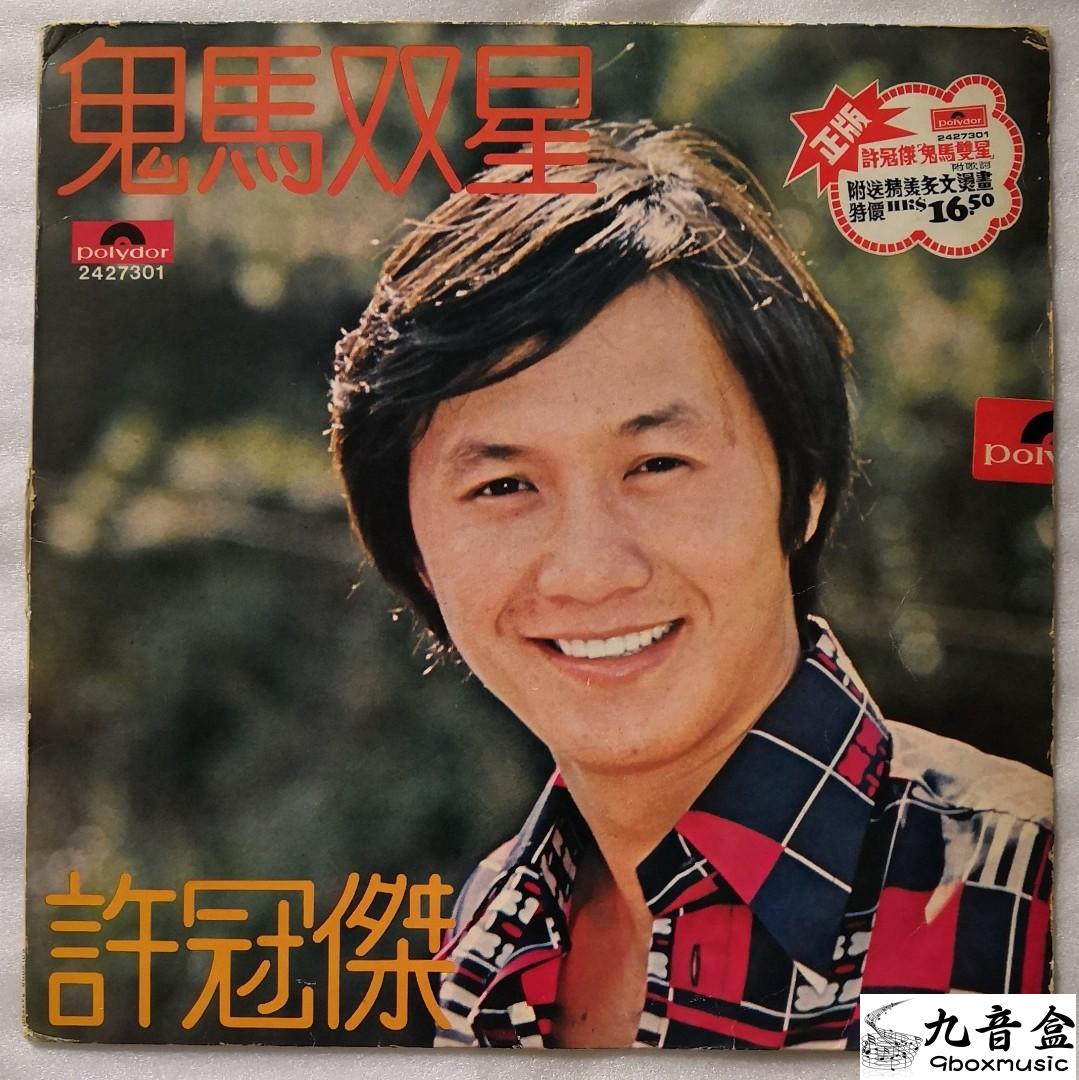
Singer: Samuel Hui
Record Company: Polydor
Release Year: 1974
Producer: Fung Tim Chi

01. The Song of the Two Stars
02. Games Gamblers Play
03. Sweet Companion
04. Cold and Heartless Night Wind
05. A Stream Separates the Heavens / Loving You for 360 Years
06. Spring Dream,Good Night
07. Water Rationing Song
08. Waiting for My Love
09. The Iron Pagoda Soars
10. Night Rain Sounds
11. The Song of the Two Stars (Instrumental)

On January 25,1986,the 8th Top Ten Chinese Gold Songs Award Concert was held at the Hong Kong Coliseum. The "Highest Honor Award" was officially renamed the "Golden Needle Award," and Samuel Hui became the first singer to receive it,a well-deserved recognition. Samuel Hui incorporated colloquial Hong Kong Cantonese into his songs,bridging classical and popular styles with his unique blend of the refined and the vernacular. He infused life philosophies,social etiquette,and passionate love into his music,singing about the optimistic spirit of Hong Kong people struggling to survive and striving for a better life.
In 1964,Samuel Hui formed the band The Harmonicks with friends,embarking on his musical journey. After the band disbanded,he joined the Bar Six band. In 1966,Samuel Hui joined The Lotus,and the following year,the band released their first EP,"Just A Little," on Diamond Records.
In 1970,Diamond Records was acquired by Polydor,and many former Diamond artists,including Joe Cheung,Fung Tim Chi,and Samuel Hui,were invited to join the new company.
In 1970,Samuel Hui released his first EP,"Time of The Season." A year later,he hosted "The Hui Brothers Show" with his elder brother Michael Hui,which became hugely popular. On April 14,1972,the second season of "The Hui Brothers Show" was launched. In the first episode,Samuel Hui performed a newly composed Cantonese song,"Just Like This," which would later become "The Iron Pagoda Soars," ushering in a new era for Cantonese pop music. The success of "The Hui Brothers Show" led to the Hui brothers' film "Games Gamblers Play." On October 17,1974,the film "Games Gamblers Play," starring Michael Hui and Samuel Hui,was officially released and achieved unprecedented success,grossing HK$6.25 million at the Hong Kong box office.
To coincide with the release of the film "Games Gamblers Play," Samuel Hui launched his first Cantonese album of the same name,co-produced by Samuel Hui and Joe Cheung. This album featured a variety of songs,ranging from romantic ballads to grassroots culture,as well as sophisticated literary art,making it an impeccable and universally appealing record. The powerful rock beats combined with humorous and witty lyrics reflecting social issues became a major characteristic of Samuel Hui's songs. With this album,Samuel Hui led the Hong Kong music scene into a new era dominated by Cantonese pop music.
The album's hit songs,"Games Gamblers Play" and "The Song of the Two Stars," have distinct styles. "Games Gamblers Play" is light and cheerful,accompanied by a powerful band,with colloquial lyrics. The four lines in the chorus – "Life is like gambling / Wins and losses are never fixed / Win,you get a laugh / Lose everything,no need to worry" – succinctly capture the common mindset of Hong Kong people. "The Song of the Two Stars," on the other hand,is full of classical charm,with elegant and heartfelt lyrics,borrowing lines like "The candlelight deepens behind the mica screen" from Li Shangyin's poem "Chang'e," showcasing Samuel Hui's profound literary foundation.
Samuel Hui's "Ghost Horse" songs were very down-to-earth,always containing a concern for real life. However,the lyrics did not stop at simply reflecting the lives of ordinary citizens but also dared to boldly criticize current affairs. The song "Water Rationing Song" specifically addressed the water rationing order imposed by the Hong Kong government in the 1970s,expressing the "deep pain" felt by the public.
"Games Gamblers Play" was the first Chinese song played on both the BBC radio in the UK and RTHK Radio 3 in Hong Kong. Samuel Hui's "Ghost Horse" songs opened up a new chapter for Cantonese pop music,and his contribution to its resurgence is immense and undeniable.
In 1980,veteran Hong Kong lyricist Lo Kwok-chan stated in the inaugural issue of "Singer & Song" magazine: "If someone is to write a history of Cantonese pop music in the future,please remember to put Samuel Hui at the top of the honor roll."
Looking to sell idle vinyl records.
Welcome to get expert appraisal services through buy back Samuel Hui Vinyl Record Series.
If you also have treasured vinyl records or old CDs at home,feel free to contact us via WhatsApp 69043974. We offer free on-site appraisals and top cash prices services across all districts of Hong Kong (more buyback cases).
 Jenny Tseng vinyl:records,!
 A Fashion Show on Records: Deciphering Anita Mui's Vinyl Covers and Retracing Hong Kong's Daringest Image Revolution
 ,:Sam Hui vinyl?