
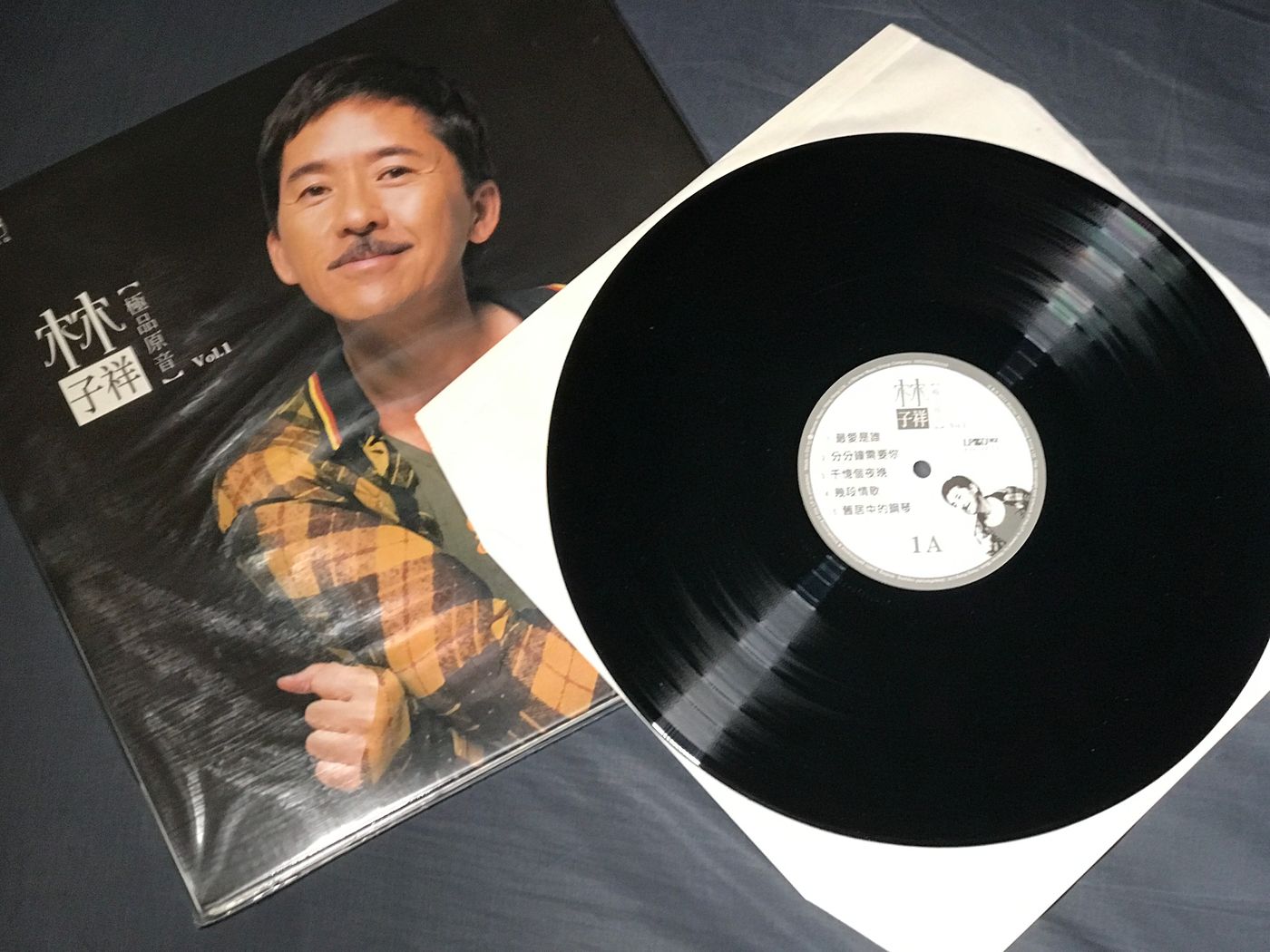
During the golden age of Chinese pop music,George Lam captivated the music scene with his expansive vocal range and astonishingly high notes. Many seasoned audiophiles share a common question: In an era of advanced digital recording technology,why do first-pressing vinyl records from the 70s or 80s by superstars like George Lam and Teresa Teng still offer a warmth in vocals,clarity in high frequencies,and emotional resonance that modern CDs or streaming music often struggle to match.
Drawing on years of experience as a secondhand dealer,"9Box Music Music" will today combine historical documents and the science of vinyl craftsmanship to fully analyze the "unchanging code" behind first-pressing vinyl records.
1. The Pinnacle of Analog Recording: The Purity of the Master Source
The artistic careers of George Lam and Teresa Teng coincided with the heyday of analog recording technology. Back then,sound waves were directly recorded onto magnetic tape,a method that captured the extremely subtle overtones and layers in human voices.
- The Absolute Advantage of First Pressings: The acoustic performance of vinyl records is significantly influenced by mastering techniques. First-pressing records typically use the original master tape directly for cutting,best reproducing the artist's true state in the recording studio.
- The Logic of Physical Wear: Pressing vinyl requires the use of a metal stamper. The more times a stamper is used,the more its fine details wear down. This means that earlier pressings with lower serial numbers will have clearer track details and a "fresher" sound.

2. Japanese Pressing Craftsmanship: The "Black Technology" of High-Frequency Resolution
When discussing George Lam's extremely penetrating high notes,one cannot overlook the contribution of Japanese pressings. During the 1970s oil crisis,Western countries commonly used bought back plastic to make records to save costs,which often led to increased surface noise and frequent pops.
In contrast,Japanese versions insisted on using "Pure Virgin Vinyl". This material resulted in extremely low background noise on the records,creating a deep and quiet listening space that perfectly allowed Teresa Teng's ethereal vocals or George Lam's high-frequency overtones to emerge.
Acoustic Characteristics of Japanese Pressings:
- High-Frequency Enhancement: Japanese mastering tended to enhance high-frequency performance,increasing the clarity and spaciousness of the music.
- Extreme Detail: Due to the purity of the material,there was more "breathing room" between instruments and vocals. For audiophiles who emphasize dynamic range,this is an invaluable sonic feast.

3. How to Authenticate Your "Golden Version".
To confirm whether a record in your possession is a valuable first pressing,you cannot rely solely on the cover date; you must examine the "Matrix Number" in the runout groove.
- Deadwax Information: This code is etched in the blank area around the label and is the most reliable basis for determining the version and pressing plant. For example,first pressings often have codes ending with
-1orA1. - Origin and Label: Early "Red Label" or "Big Red Label" Hong Kong pressings (such as Polydor) are considered rare versions that most closely replicate the sound of the original master tape.
Vinyl Version Authentication Factors (Taking Teresa Teng's Works as an Example):
| Origin Version | Technical Characteristics | Sound Performance | Market Status |
|---|---|---|---|
| Japanese Version | Pure virgin vinyl,pressed with high-precision molds | High resolution,extremely quiet background,clear high frequencies | Top-tier audiophile collector's item |
| Hong Kong Version | Early big red label,strong analog feel | Thick vocals,rich emotion,wide dynamic range | Core market value retention |
| Taiwanese Version | Many early recordings completed in Taiwan | Sound quality with a sense of the era,raw and warm | Extremely high cultural commemorative value |
| Southeast Asian Version | Mostly pressed from duplicate master tapes | Flatter sound,noticeable surface noise | Entry-level collection |

4. Market Value of Rare Vinyl (Reference in HKD)
With the vinyl revival,the value of these 70s and 80s first-pressing records has soared in the secondary market. Below is an estimated value reference compiled from the latest transaction data (converted to HKD):
Teresa Teng Vinyl Market Value Estimation Table:
| Collection Level | Representative Works and Versions | Estimated Transaction Price (approx. HKD) | Appreciation Potential |
|---|---|---|---|
| Mythical Tier | "Dàndàn Yōuqíng" first pressing (with original obi,NM condition) | HK$ 12,000+ | Very High |
| Collectible Tier | "15th Anniversary" Japanese version,Japanese limited red vinyl | HK$ 4,800 - 14,400 | High |
| Core Tier | "Island Love Songs" series Hong Kong first pressing (NM grade) | HK$ 1,920 - 6,000 | Stable |
| Audiophile Tier | Recent limited reissues (25th anniversary,etc.) | HK$ 360 - 960 | Medium |
Note: The above prices are heavily influenced by condition. NM (Near Mint) grade can be several times the value of VG (Very Good) grade.

 Mr Ho's Urgent Tuen Mun Emigration Sale: Appraising and Collecting 200 Records in 48 Hours
 Vinyl Buyback in Mei Foo, Cheung Sha Wan and Lai Chi Kok: Clearing Industrial-Building Storage
 PolyGram Gold Sets Found During Office Clearance: A Bulk Silver-Ring CD Buyback