
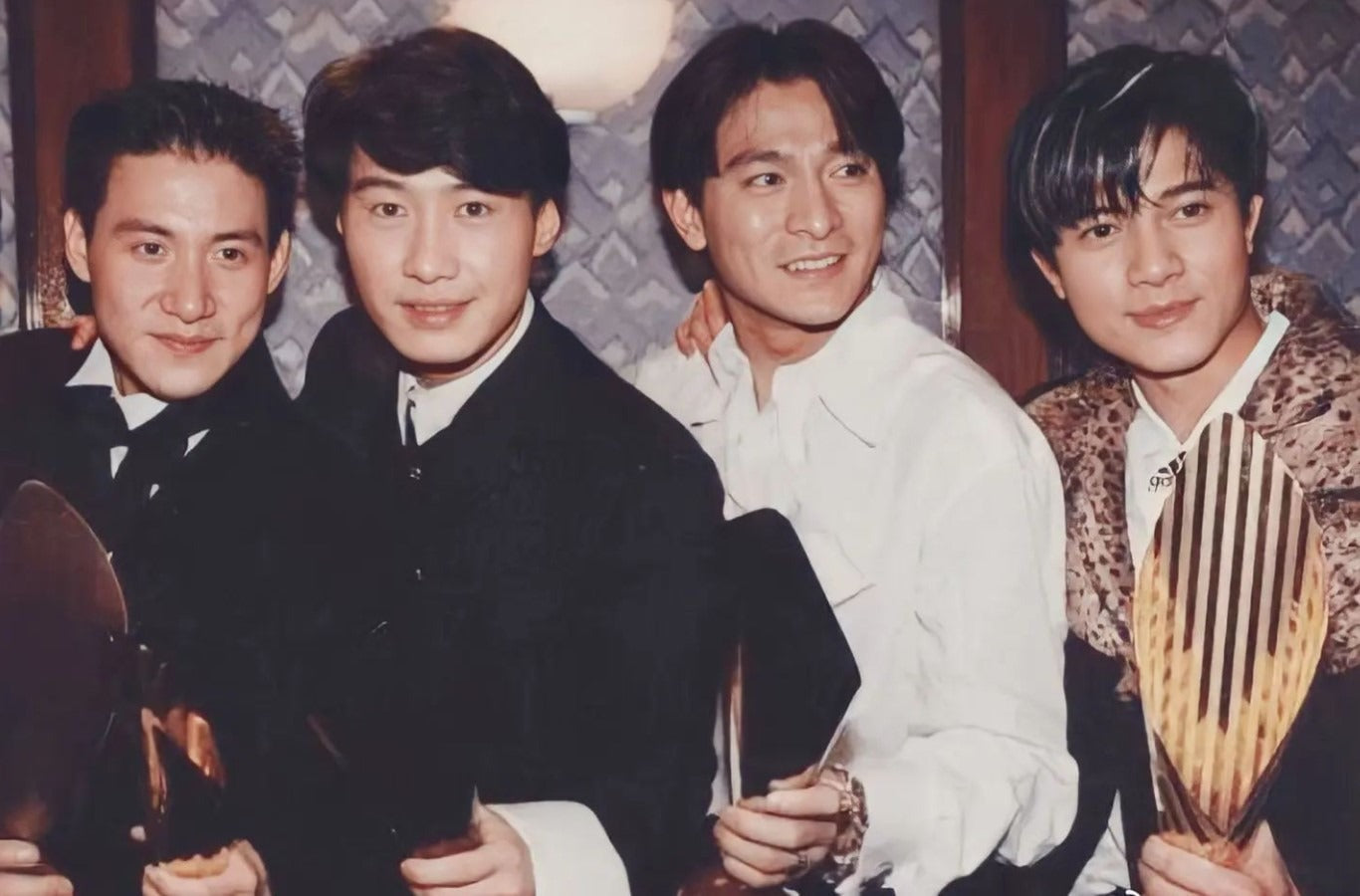
The Rapid Rise of a Music Sensation and the "Gold Record" Era
In the early 1990s,the commercial potential of the Hong Kong record market reached its peak. One of the standards for measuring a singer's success was the sales performance of their debut album. After Leon Lai won the bronze award in the "5th New Talent Singing Awards" in 1986,he initially signed with Capital Artists but did not release a solo album. It wasn't until April 1989,introduced by his singing teacher Dai Si-chung,that Leon successfully signed with PolyGram Records. Just one year later,his debut Cantonese studio album "Leon" (released on July 6,1990) achieved "Gold Record" sales (over 25,000 copies) on its release day,bringing HK$500,000 in revenue to PolyGram and Leon. This rapid commercial success immediately established his status as a "music sensation" and earned him (Newcomer Awards) from Hong Kong's three major electronic media organizations that year. This phenomenon of instant stardom upon debut was a typical characteristic of the concentrated resources and strong promotional efforts in the Hong Kong pop music market in the early 1990s.

Leon's album formats also kept pace with the times. For example,his debut album "Leon" and subsequent works like "My Feeling" and "Is Love,Is Fate" were released simultaneously in three physical formats: LP (vinyl record),CD,and cassette tape. This reflects the early 1990s as a critical period of transition from traditional vinyl/cassette to the emerging CD format. For recyclers like 9Box Music,these multi-format first-edition albums,especially limited or numbered vinyl versions (such as the mentioned ARS limited numbered vinyl records),still command high collector's value today.
Cover Song Craze and Prolific Album Strategy
Throughout the first half of the 1990s,the Hong Kong pop music scene heavily relied on licensed cover versions of foreign,especially Japanese,music. This was a significant characteristic of how the market rapidly produced popular songs. Many of Leon Lai's albums during his PolyGram era included numerous songs adapted from Japanese and Mandarin originals.
Taking his early albums as examples:
- The lead track "Meeting in the Rain" from the album "Leon" was adapted from Qu You-liang's "Illusion"; "Broken Heart Advertisement" was adapted from Boys Next Door's "Try This For Size"; and "Love Fire" was adapted from Ishida Masato's Japanese song "Rumble Fish."
- The highly successful 1991 album "Close to You" featured "If This Is Love," adapted from Anzen Chitai's "Tomodachi," which became one of his popular signature songs.
- The same year's album "My Feeling" included "Two Hearts Know," adapted from Aska's "Hajimari wa Itsumo Ame."
- Numerous popular songs from subsequent albums,such as "My Dearest" (adapted from Makihara Noriyuki's "Mou Koi Nante Shinai"),"One Night of Passion" (adapted from Anzen Chitai's "Koi no Yokan"),and even the movie theme song "Tian Mi Mi" (a cover of an Indonesian folk song),continued this international adaptation style.
Furthermore,Leon Lai's astonishing release pace in his early career also reflected how record companies capitalized on market dividends in the 1990s. In 1991 alone,he released four albums,including "Close to You," "Is Love,Is Fate," and the Mandarin albums "Will You Come Tonight" and "My Feeling." Among them,"Is Love,Is Fate," released in 1991,won the IFPI Hong Kong Top Sales Music Award for "Highest Selling Album of the Year" (with over 200,000 copies sold),proving the strong demand for physical records at the time.

The Culture of Commercial Songs: A Perfect Blend of Music and Business
Another major feature of the Hong Kong pop music scene in the 1990s was the high level of commercial integration between advertisers and top singers,using music as a powerful tool for brand promotion. Leon Lai's long-term collaboration with Hutchison Telecom is the most successful example of this.
Starting in 1993,Leon Lai collaborated with the telecommunications company for 12 consecutive years,filming a series of short,theatrical TV commercials with plots and songs,which were broadcast simultaneously during prime time.
- In 1993,Leon Lai sang "Summer of Love" for a telecom advertisement,propelling his music career to new heights.
- In 1994,the advertiser invested more resources to produce "How Can I Not Miss You Today," which not only became Leon's "Four-Station Champion Song" but also helped him sweep multiple awards that year.
- In 1995,"You Are My Eternal Love" was also an advertising song produced by the same musical team.
- Later songs such as "Just Love Me for One Day," "I Love You This Way," and "A Promise" also won advertising song awards.
This model not only brought stable income and strong exposure to singers but also made advertising songs a part of mainstream music,profoundly influencing the subsequent business model of the pop music industry.

Forward-Thinking Musical Style Changes and the Beginning of Independent Production
In the mid-1990s,the Hong Kong music scene began to seek local originality and new musical directions,to counter the long-criticized conservative style and excessive cover versions of the "Four Heavenly Kings." Leon Lai's collaboration with Mark Lui in 1996 marked a significant shift in his musical style.
- Their first collaborative work was "Unspoken Words of Deep Love," which immediately topped multiple radio pop charts upon its release.
- This collaboration elevated Hong Kong's electronic music to an international level. Leon Lai's 2000 album "Beijing Station" indeed featured electronic dance music,becoming the Hong Kong popular electronic dance music of that year.
This change in style and experimentation with electronic music demonstrated the embrace of new trends and the spirit of experimentation among Hong Kong pop musicians in the late 1990s.
Furthermore,when Leon Lai's status in the music industry reached its peak,he made two highly significant moves for the era:
- Award Success and Withdrawal: Throughout the 1990s,Leon Lai became one of the singers who won the most "Gold Song Gold Awards" at the "Jade Solid Gold Best Ten Music Awards Presentation" with numerous hit songs,receiving this honor four times in total ("How Can I Not Miss You Today," "Unspoken Words of Deep Love," "Just Love Me for One Day," "I Love You This Way"). However,on December 12,1999,he suddenly announced his withdrawal from competing in Hong Kong's music awards ceremonies,choosing to dedicate more time to music and film development. This decision symbolized the end of the fiercely competitive awards show era of the 1990s,while also reflecting the trend of superstars seeking personal creative space and developing their film careers.
- Establishment of an Independent Company: Entering the new millennium,due to the mergers and transformations of international record companies (such as Sony Music),flexibility decreased. In 2004,Leon Lai collaborated with Peter Lam to establish East Asia Record Production Limited (A Music),beginning his work in behind-the-scenes management and discovering new talents. This phenomenon of a top artist transitioning into a music industry decision-maker demonstrated the efforts of artists to gain more autonomy and promote cultural industry development in the face of the physical record industry's difficulties in Hong Kong. Leon Lai believes that in music,"creativity and courage are more important than making money."
Collector's Perspective: The Enduring Value of 1990s Physical Records
From Leon Lai's musical development in the 1990s,we at 9Box Music see not only the evolution of popular culture but also the precious value of physical records as artifacts of that era. Whether it's Leon's debut album "Leon," the award-winning "Is Love,Is Fate," or "My Feeling," where he first composed songs under the pseudonym "Tian Meng Guang," these works are all testaments to the golden age of Hong Kong pop music in the 1990s.
Due to the market's demand for nostalgic classics,many of Leon Lai's classic albums from the 1990s,such as "Leon" and "My Feeling," have recently been re-released as high-quality vinyl records,satisfying the needs of seasoned fans and collectors. For example,the latest Japanese import 180g vinyl records,like Leon Lai's "LEON" and "My Feeling" (made in Japan,first limited edition),are priced at HK$325.00 each in the market. This demonstrates that high-quality physical audio sources,especially vinyl records,still retain extremely high collection value and emotional appeal in the digital music era.
Although vinyl records may not be as precise as modern CDs or digital music in terms of technical specifications (e.g.,dynamic range,signal-to-noise ratio),many emotional vinyl enthusiasts believe they offer a warmer,more authentic,lively,and personal sonic experience. For music fans who grew up in the 1990s,returning to vinyl is not just about pursuing sound quality; it's also a continuation of the collective memories of that glorious era.
To summarize Leon Lai's musical career in the 1990s,he rose rapidly from a popular idol,experienced the mainstream cover song model of Hong Kong music,integrated deeply with the advertising industry,and eventually pursued innovation and electronic music in his style. He boldly withdrew from awards ceremonies and transformed into an industry leader. His every move reflected the prosperity,challenges,and transformations of the Hong Kong pop music scene in the 1990s. These physical music works are the best medium for us to look back at this golden history.
Looking to sell your idle vinyl records.
Welcome to get an expert appraisal service through buy back Leon Lai Vinyl Record Series.
【9Box Music: Professional buyback,Preserving Classics】
Whether you have Leon Lai's early PolyGram vinyl,limited edition CDs,or other precious physical music from 90s superstars,9Box Music is happy to appraise your cherished collections and offer high-value buyback services (more buyback Cases). We value the historical significance and collector's meaning behind every piece of music.
Entrust your collective memories of the 1990s Hong Kong pop music scene to the most professional recyclers.
Contact 9Box Music now for details!
Contact Information WhatsApp: (852)69043974Company Name: 9Box Music
 爸爸留下的老音響值錢嗎?70-90年代經典合併機、組合音響鑑定
 中文細碟(7吋45轉EP)收藏指南:為何單曲碟越來越搶手?
 紅磡、何文田、九龍城CD黑膠回收:舊區為何特別多老唱片?