
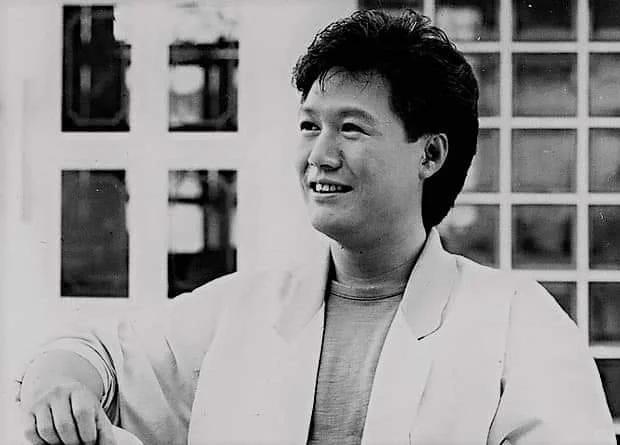
Chapter 1: From Green Folk Band to Architect's Musical Seeds
Michael Kwan Ching Kit was born in Hong Kong on March 27,1949. His musical journey began in his green student days. Early on,he attended St. Paul's Co-educational College,where Kwan formed the folk band "The Swinging Minstrels" with Ho Kwok-hei and two other classmates. They mainly performed English folk songs and won first place in the "8th Hong Kong Amateur Singing Contest" (Singing Ensemble Category) in 1967 with Peter,Paul and Mary's "Man Come Into Egypt." In the same year,they also won second place in the Talent Quest music competition organized by the Star newspaper. During this period,they even recorded the mini-album "Talent Time '67 Winners," covering Peter,Paul and Mary's "Early In The Morning" and "Settle Down."
After graduating from St. Paul's Co-educational College in 1967,Kwan Ching Kit was admitted to the Department of Architecture at the University of Hong Kong. During this time,he also recorded singles "Cecilia/Ain't That Rain" for EMI under his own name. He also appeared on TVB's "Fong Fong's Melody" program and wrote a column teaching classical guitar for "Hong Kong Television" weekly. After graduating from university in 1973,Kwan Ching Kit became an architect. At this time,music seemed to him to be just an amateur passion,but his musical seeds had already quietly sprouted.

Chapter 2: The Road to Cantonese Songs: The Turning Point from "My Heart Loves You" to "Big Husband"
Kwan Ching Kit's Cantonese singing career began in 1975. At that time,Mr. Choi Ho-ping moved to Rediffusion Television and invited Kwan Ching Kit to host his flagship music program "Audio-Visual Choi Ho-ping." In each episode,Kwan Ching Kit would sing a Cantonese song adapted from a European and American pop song. The first song was "My Heart Loves You," adapted from Don Mc Lean's famous song "And I Love You So," with Chinese lyrics written by Cheng Kwok-kong. This song can be said to have paved the way for Kwan Ching Kit's Cantonese songs.
What really made Kwan Ching Kit famous was in 1976. He sang the theme song "Big Husband" for the hit movie "Jump Ash," composed by Liu Chia-chang. This song has been popular ever since and established his position in the music industry. From this year onwards,he sang drama songs for TVB and Commercial Television as an amateur singer,mainly focusing on martial arts themes,such as "The Return of the Condor Heroes" and "Modern Heroes."
Chapter 3: The Era of Drama Songs: Establishing the Image of a "Righteous" Singing God
At the end of 1978,Kwan Ching Kit released his first solo album "Modern Heroes." At the same time,Rediffusion Television invited him to sing the theme song of the same name for the drama "Chameleon," which became an instant hit. This also established a fixed collaboration between Kwan Ching Kit and Rediffusion's resident lyricist Lo Kwok-tsim and composer Raymond Lo. Raymond Lo once said that based on Kwan Ching Kit's voice,he would write more songs with "righteousness" and "heroic spirit" for him.
In 1979,Kwan Ching Kit joined PolyGram Records and released his solo Cantonese album "Reincarnated." Since then,his singing career has developed steadily,even though his main job was still an architect. At that time,Hong Kong's music production level was not yet mature,and albums rarely had a unified and distinct style. Kwan Ching Kit's early albums mostly featured drama songs,supplemented by adaptations of famous foreign songs,such as "Snow in the Heart" (adapted from Tai Chao-mei and Shih Bi-wu's "If"),"Speechless" (adapted from The New Christy Minstrels' "Today"),and "Star" (adapted from Shinji Tanimura's "Subaru").
His record sales were very successful. The albums "Reincarnated," "The Buddhist Scripture of the Heavenly Dragon," "People in the Jianghu," and "Grace of the Earth" all received IFPI Hong Kong certified local platinum records. The songs "Reincarnated," "Lingering Dream," and "Tears on the Journey of Life" (duet with Annabelle Lui) were also selected as the Top Ten Chinese Gold Songs at the Top Ten Chinese Gold Songs Awards Concert. He also won the "Top Ten Singer Golden Camel Award" in 1979,which was the only singer selection event in Hong Kong in the 1970s.
In 1981,due to personnel changes at Rediffusion,Kwan Ching Kit switched to TVB. He signed a commitment with TVB,guaranteeing that his performances would only appear on TVB screens. After joining TVB,his creative team for drama songs also changed. The resident producer became Yeung Kiu-hing,and the composer became TVB's music director Joseph Koo,paired with lyricists such as James Wong and Cheng Kwok-kong,with most themes being "ancient costumes." Representative works include "The Brave Archer," "How Much Sadness in Love," "Forgetting Each Other in the Misty River" (duet with Susanna Kwan),and "Drunken Red Dust." In addition,non-film and television songs also achieved great success,earning Kwan Ching Kit several music awards,such as the lyrical work "Always in My Heart" in collaboration with Taiwanese singer Huang Lu-yi (mistakenly written as a Singaporean singer in some sources),"Fisherman's Song at Dusk" derived from traditional Chinese music,and "The Legend of the Galaxy" which creates a boundless universe feeling with electronic synthesizers. Kwan Ching Kit also composed for his albums,including "On the Wilderness," "Ode to Plum Blossoms," and "Sooner or Later a Pair." During this period,his IFPI Hong Kong certified local platinum records included "Kwan Ching Kit's Greatest Hits," "Young Hero," "Kwan Ching Kit Concert," "The Demi-Gods and Semi-Devils: The Legend of Xuzhu," "Always in My Heart" (his first involvement as a producer),and "The Legend of the Galaxy."

Chapter 4: Peak and Honor: The Public Image of a Reclusive Singing God
Although Kwan Ching Kit was low-key and did not like publicity,his records sold very well. He released 18 albums,10 of which achieved platinum sales. For example,"Young Hero" sold platinum two days after its release in 1981 and sold out,a record that remains unbroken to this day. His songs are full of positive energy,and coupled with zero negative news over the years,his image is "righteous." Writer Lin Yan-ni once praised his voice as "noble and elegant," and his handling of lyrics and emotions as "delicate and lingering," while he appeared "like a shy university student." Music blogger Muzikland also pointed out that his voice is not powerful,and his interpretation often includes soft and ethereal sounds,making his style unique and full of charm.
Due to his positive and healthy image,Kwan Ching Kit was invited to sing many public welfare songs,such as "A Little Candlelight" (selected song for the International Year of Disabled Persons Hong Kong 1981),"A Voice" (theme song for the 1985 Hong Kong District Council elections),and "Lighting the Flame" (theme song for the 1985 International Youth Year). In 1982,he was selected as one of the Ten Outstanding Young Persons of Hong Kong for his achievements in the entertainment industry and contributions to community work. In 1985,he was awarded an honorary medal by the British.
Chapter 5: Farewell to the Music Scene: Retreating for Family and Architectural Career
In 1984,Kwan Ching Kit left PolyGram and joined Cony Records. In his first album "Kwan Ching Kit," he once again participated in the production and composed five songs himself. The album was positioned as "middle-class elegant" and "peaceful." The subsequent album "'85 Kwan Ching Kit" broadened his musical style,with an increased proportion of fast songs. Unfortunately,the reputation of these two albums was not as good as during his PolyGram period.
In 1986,Kwan Ching Kit switched to EMI and released the mini-album (EP) "The Revelation of the Mussel," co-singing with Lowell Lo and Albert Au,which was considered his comeback. In the same year,he released the album "Revelation," returning to his image and singing style from the later PolyGram period. However,the album's market response was lukewarm,and he also disappeared from major music awards ceremonies.
In 1988,Kwan Ching Kit released his last album "An Autumn." After that,he still participated in some music activities and sang three TV drama theme songs between 1989/90 (not recorded on any album). Until he attended the New Year's Eve program "Together We Create 90" on December 31,1989,he officially retired from the music scene. His departure was without warning and he did not hold a farewell concert. In the early 1990s,Kwan Ching Kit and his family moved to Seattle,USA,to continue his architectural career.
Over the years,many media and music industry figures,including Joseph Koo,Ni Bing-long,and Yip King-kau,have invited him to make a comeback or be a guest performer,but all were rejected. His university senior and former manager Selina Chow disclosed that Kwan Ching Kit and his wife are both architects,and after immigrating to Seattle,they became developers. The reason he refused to make a comeback was because "I haven't sung for a long time! To hold a concert,you need to practice songs!" He loves singing,but he loves his architectural career and family more,and he cares little about fame and fortune. It is said that he also immigrated somewhat because he feared the 1997 handover. Joseph Koo once drove from Vancouver to Seattle to persuade him to make a comeback,but Kwan Ching Kit said he had retired and did not want to appear in public again. He is also a computer enthusiast. This "righteous singing god" chose to retreat,leaving countless classics and the longing of his fans.
Chapter 6: The "Priceless Treasure" and Market Value of Vinyl Records
At "9Box Music," we deeply understand the value of vinyl records,especially the works of legendary singers like Kwan Ching Kit. They are not just music,but also a part of Hong Kong's popular culture. Raymond Lei's column "Hi-Fi Basics Sixty-One: The Secret to Long-Lasting Vinyl Records" mentioned that many audiophiles with more than 200 LPs are considered small collectors,500 to 2,000 are medium,2,000 to 5,000 are large,and over 10,000 are masters. He also emphasized that your LPs are a part of your life's property and are appreciating every day.
Today,Kwan Ching Kit's vinyl records have a good price in the market. For example,on Carousell,Kwan Ching Kit's vinyl records are priced from HKD 300 to HKD 195,000. Among them,"Kwan Ching Kit 'Grace of the Earth' Vinyl Record" is priced at HKD 300; "Kwan Ching Kit's Greatest Hits 81 PolyGram Vinyl (with lyrics and poster) #well preserved,clean and complete,beautiful" is priced at HKD 380. New Kwan Ching Kit vinyl records on Taobao are priced between RMB 114.8 and RMB 380,which is approximately HKD 124 to HKD 410 (calculated at 1 RMB ≈ 1.08 HKD). In the foreign market,a well-preserved EMI or Decca classical LP is casually priced at 12 pounds (approximately HKD 117.6),and new ones are only 9 pounds (approximately HKD 88.2) (calculated at 1 pound ≈ 9.8 HKD). In the US market,a Mercury Living Presence or RCA "Shaded Dog" LP starts at an average of 300 US dollars (approximately HKD 2340) (calculated at 1 US dollar ≈ 7.8 HKD). All these demonstrate the collection value and appreciation potential of vinyl records.

Chapter 7: Comprehensive Guide to Vinyl Record Maintenance: Secrets to Longevity
As recyclers,we have seen many vinyl records damaged due to improper maintenance,so we would like to share with you the correct methods for maintaining vinyl records,so that your treasured collections can be preserved for a long time.
1. Basic Knowledge and Environmental Control
- Complete Components: A complete vinyl record should include the record itself,a plastic inner sleeve,a paper inner sleeve,a cover,and a plastic outer sleeve. To maintain the appearance of the cover,it is recommended to put it in another plastic record sleeve.
- Cleaning Habits: When playing LPs,refrain from smoking and drinking. Always wash your hands before playing,and do not touch the record grooves with your fingers. When holding a bare LP,do not spray saliva.
- Humidity Control: Hong Kong has high humidity,often exceeding 80%,while the ideal humidity for playing LPs is 60% to 70%. The biggest enemy in high humidity areas is "mold," i.e.,fungi,microorganisms,and even moss. Mold can grow on the "land" parts of the record. Smoke,alcohol,and sugary drinks on the LP will quickly cause mold to grow.
2. Dry Cleaning: Daily Maintenance
- Dusting: For newly purchased vinyl records or records that have been stored for a while,it is recommended to brush off dust before playing,otherwise it will affect the sound quality.
- Brush Selection:
- Ordinary soft brush: The cheapest,about HKD 60 (approximately TWD 250),mainly to sweep away large dust and hair.
- Velvet brush: Approximately HKD 156 to HKD 192 (approximately TWD 650 to TWD 800),with better cleaning effect,can stick dust to the brush.
- Carbon fiber anti-static record cleaning brush: For example,Ortofon's carbon fiber brush,approximately HKD 288 (approximately TWD 1200). The function of carbon fiber is to eliminate static electricity and reduce dust adhesion. Excessive static electricity will cause dust to accumulate and affect playback sound quality.
- How to Use: Turn on the turntable,let it spin,gently place the brush on the record,run it slowly along the grooves,and finally sweep the dust outwards along the circumference.
3. Wet Cleaning: Deep Treatment and Precautions
- Avoid Wet Cleaning: Mr. Lei Ming guarantees with his personal credibility that wet cleaning LPs in Hong Kong will definitely be a disaster. After wet cleaning,the record will mold within three months,forming "V-groove accumulation," which means dirt hardens into a cement-like substance stuck at the bottom of the V-groove. These hardened dust particles are insoluble in water and difficult to remove.
- Vacuum Suction: The only safe way to clean LPs is by vacuum suction. Keith Monks invented the KMAL vacuum suction LP cleaning machine,which uses a cleaning solution of isopropyl alcohol dissolved in distilled water,and then quickly sucks it dry. Modern VPI and Nitty Gritty cleaning machines also use similar principles.
- Hand Washing for Emergencies (not recommended for long-term use):
- Cleaning Agent: Alcohol is not recommended (damages the record),but can be used once in an emergency. Acetone and vinyl alcohol must not be used. Isopropyl alcohol is safer,but not suitable for long-term use,nor should it stay on the record surface for more than 10 minutes.
- Hand Washing Steps: First,use a dry brush to wipe off dust from the record surface,then use a cotton ball moistened with alcohol to gently wipe the LP in a rotating motion,applying more force to moldy areas. Mold stains on the record label should be wiped off with a separate small cotton ball. After applying alcohol evenly,quickly wipe the record surface dry with a dry cotton ball.
- Wet Cleaning Kit: There are also vinyl cleaning kits available on the market,such as Essentials' kit,approximately HKD 432 (approximately TWD 1800),which includes a carbon fiber brush and cleaning solution. When using,avoid spraying on the label. After spraying,let the cleaning solution penetrate for 30 seconds,then use a microfiber cloth to wipe along the circumference of the record. Do not brush back and forth or left and right to avoid scratching. After cleaning,let it air dry,making sure it is completely dry before putting it back in the inner sleeve to avoid re-molding.
- Stylus Cleaning:
- Dry Cleaning: Use a stylus cleaning brush,brushing from back to front. Do not brush back and forth or left and right to avoid breaking the stylus. Carbon fiber stylus brushes have anti-static effect and can remove finer dust.
- Wet Cleaning: There are dedicated cleaning solutions on the market,such as Audio-Technica stylus cleaner,approximately HKD 79.2 (approximately TWD 330),with soft bristles,brushing from back to front. If the stylus has rubber parts,the cleaning solution should not touch them.
Treasuring Hong Kong Sentiments,Extending Musical Life
Kwan Ching Kit's musical career is like a microcosm of the development of Hong Kong's pop music scene. From the early folk enlightenment to the rise of Cantonese songs,and then to the glory of drama songs,he left a valuable legacy for the Hong Kong music scene with his unique "righteous" image and gentle yet firm voice. His works are not just a combination of melody and lyrics,but also carry the collective memories and sentiments of a generation of Hong Kong people.
Here at 9Box Music,we deeply believe that every vinyl record is a unique work of art,worth cherishing and passing down. If you also have Kwan Ching Kit's vinyl records,or other historically valuable music treasures,not just physical vinyl records,CDs,and cassette tapes,but also stamps,pottery,silver coins,antique wines,watches,luxury goods,calligraphy and paintings,jade,gold,etc.,we welcome you to bring them to us for a free valuation and quotation from our professional team. We will find the best home for your treasures in the safest,most reliable,and absolutely confidential way.
Want to sell idle vinyl records.
Welcome to buy back Kwan Ching Kit Vinyl Record Series,to get expert quotation service.
Contact us now to give your treasures a new lease of life!
Whether you want to sell your treasures,find your beloved nostalgic items,or learn more about collecting,9Box Music is always at your service.
Our contact information
- WhatsApp Inquiry: (852)69043974
We look forward to working with you to continue the legend of Hong Kong pop culture,so that every treasure finds its "second home"!
 【回收案例】茶餐廳結業執到寶:閣樓塵封的80年代雜錦黑膠與卡帶
 1996嘉利大廈大火與母帶損失:為何令80年代首版黑膠變成「孤品」?
 唱片回收防伏指南:如何避開壓價陷阱、選擇可靠回收商?