
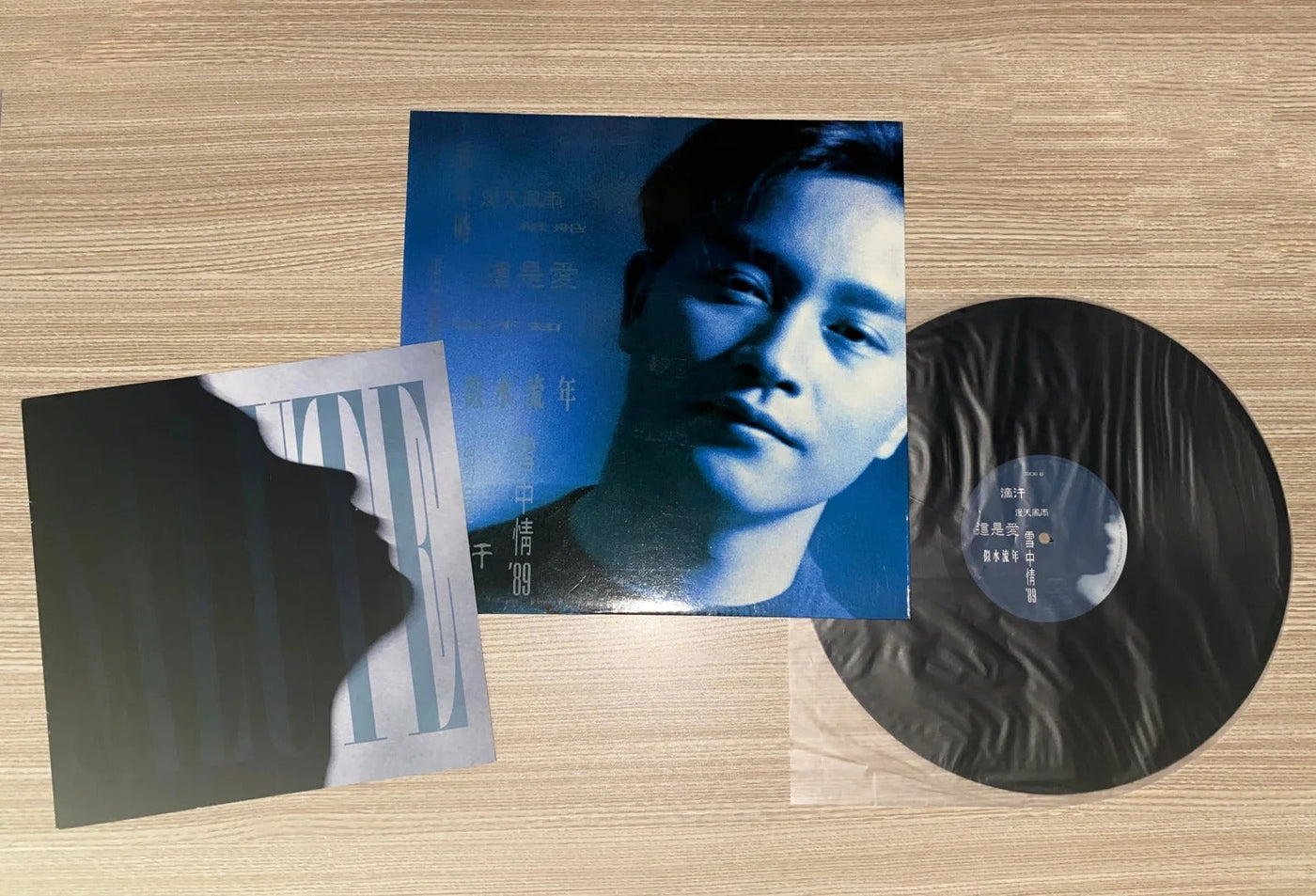
I. The Soul of Analog: A Perfect Match for "Gor-Gor"'s Vocals
We often say that vinyl records have "warmth," and this isn't metaphysics,but physics. Leslie Cheung's artistic career spanned the transition from analog to digital recording. For audiophiles,Leslie Cheung's most captivating quality was his highly recognizable mid-to-low range resonance,a rich,mellow voice like aged cognac,which shares a natural "blood relationship" with the acoustic characteristics of vinyl records.

1. Physical Grooves vs. Digital Sampling CDs use binary digital sampling. While they offer a quiet background,early technology often made vocals sound too "clean" and lacking in depth. Vinyl records,on the other hand,record sound waves through physical engraving. As the stylus glides into the groove,the "even-order harmonic distortion" produced by the analog signal imparts a warm,rounded quality to the sound.
When playing slow love songs like "For Your Heart Only" or "Who Can Resonate with Me," vinyl can reproduce the subtle tremors and throaty nuances in Leslie Cheung's voice—that "airy" and "fleshy" quality,as if he were whispering right in front of you. This enveloping sense of emotion is hard to achieve with the cool precision of CDs.
2. A Testament to the Recording Era The 1980s marked the peak of analog recording technology in Hong Kong. Recording studios at that time mostly used large analog mixing consoles and open-reel master tapes. Taking the legendary 1989 cover album "Salute" as an example,the vinyl version preserved the most original studio atmosphere in terms of soundstage width and instrument imaging. For collectors seeking the ultimate listening experience,the first pressing vinyl is the "truth" closest to the master tape.
II. Material Aesthetics: The Visual Art of 12 Inches
While the advent of CDs reduced their size,it also stifled the space for visual artistic expression. For an artist like Leslie Cheung,who pursued perfection,the 12-inch vinyl sleeve was a battleground for showcasing his fashion sense and personal aesthetics.
1. Masterful Cover Designs Leslie Cheung's album covers were often designed by top designers,such as Alan Chan. In the sleeve for "For Your Heart Only," the close-up shot precisely captured the gold ring on his hand,echoing the vows in the lyrics; and in the "Stand Up" album,daringly released with purple,yellow,green,and black colored vinyl,elevating the vinyl record to the level of Pop Art.
When you hold a large 30 x 30 cm record,observing the details,colors,and composition on the cover,the visual impact is incomparable to a 5-inch CD booklet.

2. The Ritual of Collecting Taking the heavy record out of its sleeve,gently wiping away dust,and then lowering the tonearm—this is a ritual,a dialogue with music. This "slow living" experience is especially precious in fast-paced Hong Kong. For "Gor-Gor fans," collecting vinyl is not just owning music,but also owning a tangible piece of history.
III. Market Data Speaks: The Rarity and Appreciation Potential of Vinyl
As a reseller,I prioritize asset liquidity and appreciation potential. On this front,Leslie Cheung's vinyl records have shown astonishing explosive power.
1. Rarity Dividend from a Transitional Era In the early 1990s,as CDs became widespread,vinyl production drastically shrank. This led to very limited vinyl releases for Leslie Cheung's later albums (such as "Final Encounter"). Scarcity drives value,and these "late-period vinyl records" are now highly sought after in the market.
2. Striking Price Comparison Let's look at some market reference data (prices are for reference only and depend on condition):
- "Stand Up" (1986): The colored vinyl versions of this album are highly popular among collectors. A set of purple or green vinyl in excellent condition can fetch HK$1,800 to HK$2,500 on Carousell or the second-hand market,and if a complete set of all four colors is available,its value doubles. In contrast,a regular CD from the same period might only be worth a few hundred dollars.
- "Salute" (1989): This album,a tribute to music industry veterans,has its first pressing vinyl (especially the "all flat center label" version) considered a sonic masterpiece. Its market price consistently fluctuates between HK$3,000 and HK$8,000,depending on the version and country of origin.
- "For Your Heart Only" (1985): The original pure white vinyl of that year,symbolizing the purity of love,now has a resale value of around HK$1,500 to HK$3,000 in good condition.

In contrast,in the CD market,apart from a very small number of "Sanyo pressings" or "1A1" first pressings that can command high prices,the resale value of most common reissued CDs is far lower than vinyl. The resilience and appreciation potential of vinyl records are clear from the data.
IV. Version Archaeology: The Joy and Threshold of Collecting
The joy of collecting vinyl also lies in "version archaeology." This is why I am particularly meticulous during authentication.
- First Press vs. Reissue: In the vinyl world,"first pressing" is king. Because the metal mother plate used for pressing wears down with the number of pressings,a first pressing often means the richest details and dynamics. Although Universal Music has released many reissues and colored vinyl records in recent years,catering to new fans,for seasoned collectors,the original 1980s pressings are irreplaceable historical artifacts.
- The Battle of Origin: Leslie Cheung's vinyl records come in Hong Kong,Korean,and even European pressings. Generally,Japanese pressings (such as the Toshiba version of "Stand Up") are highly regarded for their meticulous craftsmanship and quiet background; European pressings offer powerful dynamics; while some Korean pressings,though cheaper,are slightly inferior in sound quality and collector's value.

V. Advice for New Collectors: How to Start.
If you're looking to start collecting Leslie Cheung's vinyl records,or if you have old records passed down from older relatives,here are a few tips from a reseller:
- Condition is Key: Vinyl records are most susceptible to scratches and warping. A record with an intact sleeve and a pristine disc (Near Mint) can be ten times more valuable than one full of scratches. Always store them vertically in a cool,dry place (a dehumidifying cabinet is a good investment).
- Check for Accessories: Lyric sheets,posters,original stickers—the completeness of these "accessories" directly affects the value. For example,if the sticker inside "Stand Up" is still present,its value will be higher.
- Identify Versions: Learn to read the matrix number in the run-out groove of the record,which is the "ID card" for identifying first pressings and reissues.
Conclusion
Leslie Cheung's vinyl records are a microcosm of the golden age of Chinese pop music. They combine top-tier analog recording craftsmanship,cutting-edge visual design,and irreplaceable rarity. Compared to the convenience and digitalization of CDs,vinyl offers a warmer,more ritualistic listening experience,while also being a highly promising investment asset.
As the stylus gently drops,and that familiar voice vibrates in the air,you'll find that you're not just listening to music,but reuniting with a glorious era.
Do you also have these dust-covered treasures hidden at home.
Whether you are a seasoned collector looking to sell your prized possessions,or you found old records left by elders while tidying up and are unsure of their value,do not treat them as ordinary waste!
9Box Music have a professional appraisal team,and we deeply understand the cultural and market value of every vinyl record. We offer:
- Professional Free Valuation: Just send us photos,and instantly understand the market value of your records.
- top cash prices: For vinyl records and CDs of classic Hong Kong stars like Leslie Cheung,Danny Chan,and Beyond,we offer highly competitive buyback prices.
- Door-to-Door Service: Have a large quantity or find it inconvenient to transport. We offer thoughtful door-to-door buyback service.
Don't let classics sit aside; let good music flow into the hands of those who appreciate it!
Shop Name: WeContact us now (WhatsApp): (852) 6904 3974We look forward to communicating with you and jointly safeguarding this precious musical heritage.
 【回收案例】屯門何先生移民急讓:48小時完成200張黑膠估價交收實錄
 美孚、長沙灣、荔枝角黑膠回收:工廈迷你倉執位必看
 【回收案例】辦公室執位發現寶麗金金碟套裝:銀圈CD批量回收實錄